What Is Dehydrated Food Powder? A Complete Guide for Food Manufacturers
Dehydrated food powders are concentrated, shelf-stable ingredients used across food manufacturing. This guide explains how they are made, what to look for when sourcing, and why quality matters.
Dehydrated food powder is exactly what it sounds like: a fresh fruit, vegetable, herb, or other food item that has had its moisture removed through a controlled drying process, then ground into a fine powder.
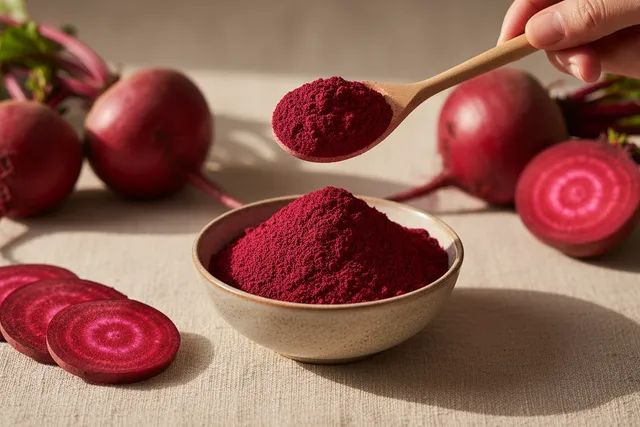
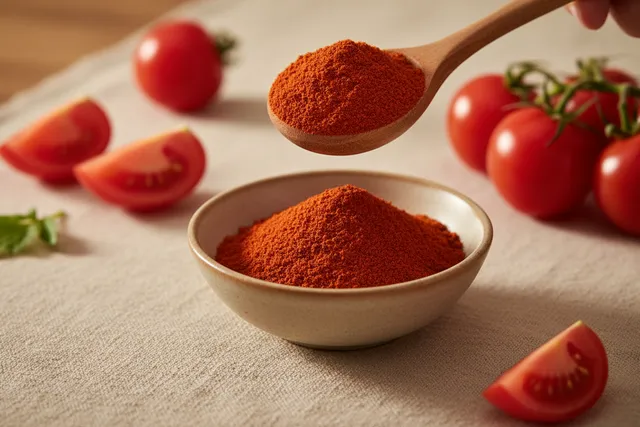
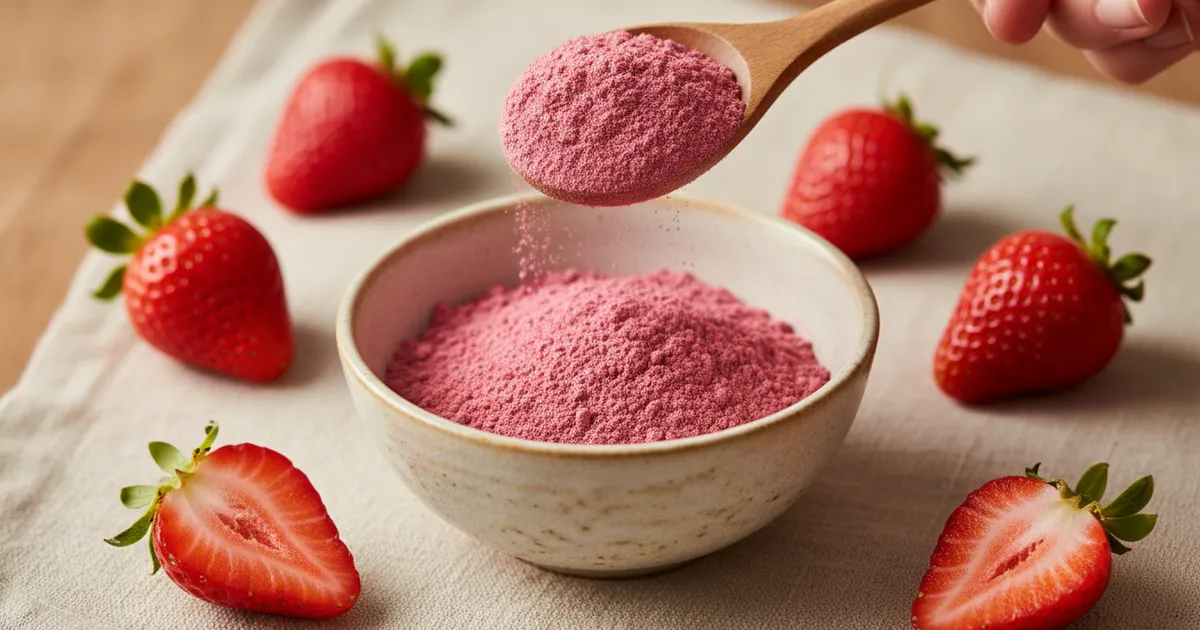
No complicated chemistry. No synthetic transformation. The process takes a tomato and turns it into tomato powder. Takes a strawberry and turns it into strawberry powder. Takes ginger root and turns it into ginger powder. The food is still the same food — just without the water.
This simplicity is precisely why dehydrated food powders have become a foundational ingredient in modern food manufacturing. They offer the flavour, colour, and nutrition of fresh produce in a format that is shelf-stable, lightweight, and easy to handle at industrial scale.
How Dehydrated Food Powder Is Made
The production process follows a straightforward sequence:
Sourcing and selection. Fresh produce is procured — ideally at peak ripeness for maximum flavour and nutrient content. Quality at this stage determines quality of the final powder. A mediocre tomato produces a mediocre tomato powder.
Washing and preparation. The produce is thoroughly washed to remove dirt, pesticide residues, and surface contaminants. Depending on the product, it may be peeled (ginger, beetroot), deseeded (tomato), or sliced into uniform pieces for even drying.
Drying. This is the critical step. The prepared produce is placed on trays in a drying chamber where warm air (typically 50–70°C) circulates continuously for 8–24 hours. The target is to reduce moisture content to below 5–6%, which makes the product shelf-stable without refrigeration.
Lower temperatures preserve more nutrients, flavour compounds, and natural colour. Higher temperatures speed up the process but degrade quality.
Milling and sieving. The dried product is ground into powder and passed through sieves to achieve a uniform mesh size. Common specifications range from 40 mesh (coarser, for cooking applications) to 100 mesh (very fine, for beverages and coatings).
Testing and packaging. Every production batch is tested for moisture, microbial load, colour value, and (where relevant) specific nutrients like lycopene or vitamin C. The powder is then packed in moisture-proof, food-grade packaging — typically multi-layer pouches or HDPE drums for bulk orders.
What Dehydrated Food Powder Is Not
Some clarifications are worth making upfront, because these terms are frequently confused in the market:
It is not freeze-dried powder. Freeze-drying (lyophilisation) works by freezing the product and then removing moisture through vacuum sublimation. It produces excellent results but at 5–10 times the cost of thermal dehydration. Freeze-dried powders are common in high-end supplements and space food, but rarely used for bulk food manufacturing.
It is not spray-dried powder. Spray drying converts a liquid feed into powder using extremely high temperatures (150–220°C) and typically requires carrier agents like maltodextrin. The result is not a pure food powder — it contains added fillers. Dehydrated food powder made through thermal drying contains only the food itself.
It is not a flavouring or extract. Flavourings and extracts isolate specific compounds from food. Dehydrated food powder retains the complete profile of the original food — fibre, minerals, vitamins, pigments, and flavour compounds together.
Why Food Manufacturers Use Dehydrated Powders
The advantages over fresh produce and other preserved formats are practical and financial:
Year-round availability
Fresh produce is seasonal. Tomatoes peak in summer. Strawberries have a narrow harvest window. Dehydrated powders, once produced, are available year-round with consistent specifications — no supply gaps, no seasonal price spikes.
Extended shelf life
Fresh tomatoes last 7–10 days. Tomato paste lasts 12–18 months but requires refrigeration after opening. Dehydrated tomato powder lasts 12–18 months at room temperature in sealed packaging. No cold chain required from factory to end user.
Reduced weight and volume
Removing 90–95% of the water from fresh produce reduces weight and volume by a corresponding amount. This translates directly into lower shipping costs, smaller storage requirements, and easier handling on production lines.
A 25 kg bag of dehydrated onion powder is equivalent to approximately 250 kg of fresh onions. That is a significant logistics advantage for food manufacturers operating at scale.
Consistent quality
Fresh produce varies — in size, ripeness, sugar content, colour, and microbial load. Every delivery is different. Dehydrated powder from a good supplier delivers consistent moisture, colour value, mesh size, and microbial counts batch after batch. This consistency makes formulation predictable and quality control simpler.
Easy integration into dry processes
Dehydrated powder blends seamlessly with other dry ingredients — spices, flour, salt, sugar, seasoning mixes. No special equipment is needed to handle it. No modified atmosphere packaging. No thawing cycles. It drops into existing dry blending and packaging lines without modification.
Common Dehydrated Food Powders and Their Applications
Vegetable Powders
| Product | Primary Applications |
|---|---|
| Tomato powder | Soups, sauces, seasonings, pasta, snack coatings |
| Onion powder | Seasoning blends, processed foods, ready meals |
| Garlic powder | Spice mixes, marinades, sauces, snack seasonings |
| Ginger powder | Beverages, baked goods, health supplements |
| Beetroot powder | Natural food colouring, smoothie mixes, health drinks |
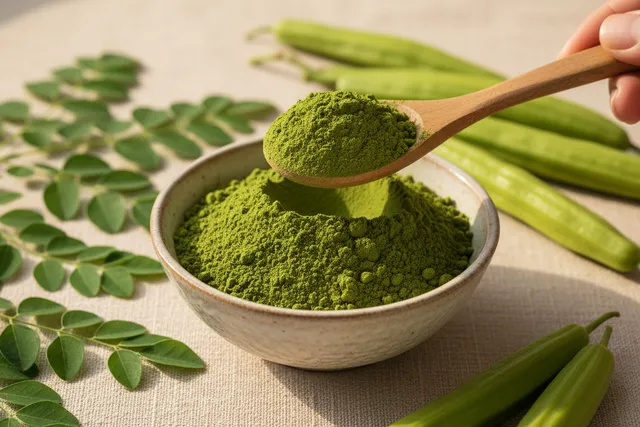
| Moringa powder | Health supplements, energy bars, superfood blends |
Fruit Powders
| Product | Primary Applications |
|---|---|
| Strawberry powder | Dairy flavouring, bakery, confectionery, smoothie mixes |
| Orange powder | Beverages, flavour bases, confectionery |
| Pineapple powder | Juice mixes, health drinks, dessert toppings |
| Apple powder | Baby food, cereal coatings, bakery |
| Blueberry powder | Health supplements, smoothie mixes, superfood blends |
| Amla powder | Nutraceuticals, traditional medicine, health drinks |
Quality Parameters to Evaluate When Buying
Not all dehydrated powders are equal. Here is what separates a good product from a poor one:
Moisture Content
Should be below 6%, ideally below 5%. Higher moisture means shorter shelf life and higher risk of microbial growth. Check the COA — do not rely on claims.
Mesh Size
Determines how the powder performs in your application. Coarser mesh (40–60) works for cooking and dry mixes. Finer mesh (80–100) is needed for smooth beverages, coatings, and capsule fills. Mismatched mesh size is a common cause of customer complaints.
Colour Value
For products used as natural colourants (beetroot, tomato), colour value measured in ASTA units or CIE Lab values matters commercially. A deeper colour means the supplier used ripe produce and a well-controlled drying process.
Purity
Ask whether the product is 100% the named ingredient or contains carriers, fillers, or anti-caking agents. Some suppliers add maltodextrin, tricalcium phosphate, or silicon dioxide without prominently disclosing it. Request a full ingredient declaration.
Microbial Testing
At minimum, every lot should be tested for total plate count, yeast, mould, coliforms, E. coli, and Salmonella. For products entering the EU, US, or Japan, additional testing for Listeria, Bacillus cereus, and Cronobacter may be required.
Heavy Metals and Pesticide Residues
Lead, arsenic, cadmium, and mercury limits apply in every major market. Pesticide residue testing against destination-country MRL databases is increasingly mandatory for exports.
How to Store Dehydrated Food Powders
Proper storage protects your investment:
- Store in a cool, dry area below 25°C
- Keep away from direct sunlight — UV degrades colour and nutrients
- Use moisture-proof packaging with oxygen barrier properties
- Once opened, reseal immediately or transfer to airtight containers
- First In, First Out (FIFO) inventory management — always use older stock first
- Avoid storage near strong-smelling products, as powders can absorb odours
Under proper conditions, most dehydrated food powders maintain their quality for 12–18 months from the date of manufacture.
Choosing a Supplier
The supplier relationship in dehydrated food ingredients is not transactional — it is operational. A reliable supplier delivers consistent quality, on-time shipments, and responsive communication when issues arise.
Evaluate suppliers on:
- Certifications: FSSAI (mandatory in India), ISO 22000, HACCP, and market-specific certifications (Halal, Kosher, FSSC 22000)
- Traceability: Can they trace a finished product lot back to the farm and harvest date?
- Lab testing: Do they test every batch, and will they share COA reports before shipment?
- Capacity: Can they handle your volume requirements consistently?
- References: Can they connect you with existing buyers who can vouch for their reliability?
- Sample policy: Will they send evaluation samples before you commit to a bulk order?
A supplier who hesitates on any of these points is not ready for professional food manufacturing supply chains.
Final Thoughts
Dehydrated food powder is not a trend. It is a mature, proven ingredient format that solves real problems in food manufacturing — seasonal variability, cold chain costs, shelf life limitations, and formulation inconsistency.
The manufacturers who source it well — from certified suppliers, with tight specifications, and proper documentation — build products that perform reliably at scale. The ones who treat it as a commodity and buy on price alone eventually discover why quality matters, usually through a customer complaint or a failed audit.
Invest in the ingredient. It pays for itself.
ThermDry manufactures 100% pure dehydrated vegetable and fruit powders using controlled low-temperature thermal drying. No carriers, no fillers, no additives. FSSAI licensed, lab-tested every batch. Based in Ahmedabad, India. [Contact us for bulk pricing and samples.]