10 Industrial Applications of Dehydrated Tomato Powder
From instant soups to snack seasonings, dehydrated tomato powder is one of the most versatile ingredients in commercial food production. Here are ten proven industrial applications.
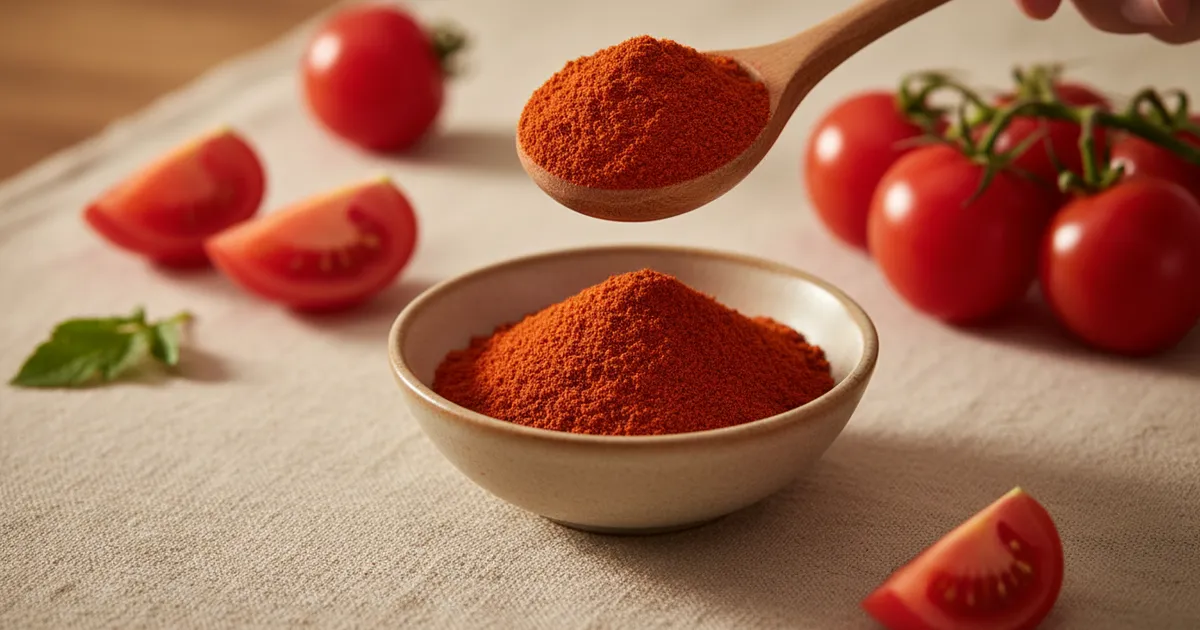
Fresh tomatoes are roughly 95% water. Remove that water through thermal dehydration, and what remains is a concentrated powder that packs the flavour, colour, and nutritional profile of tomatoes into a fraction of the volume and weight.
For food manufacturers, this matters. Dehydrated tomato powder eliminates cold chain dependency, extends shelf life to 12–18 months, reduces shipping costs, and delivers consistent quality year-round — regardless of tomato harvesting seasons.
Here are ten proven industrial applications where dehydrated tomato powder is already a staple ingredient, along with practical notes on how it performs in each.
1. Instant Soups and Soup Mixes
Tomato powder is a foundational ingredient in dry soup mixes. It rehydrates quickly when hot water is added, releasing tomato flavour and a characteristic red-orange colour within seconds. Manufacturers use it as both a primary flavouring agent and a natural colourant, reducing or eliminating the need for added dyes or artificial flavour enhancers.
Typical inclusion rate: 8–15% of the dry soup mix by weight.
2. Seasoning Blends and Spice Mixes
From pizza seasoning to taco spice blends, tomato powder adds body, umami depth, and a subtle sweetness that balances heat from chilli and pepper. Because it is a dry powder, it integrates seamlessly into existing dry blending operations without altering moisture content or shelf stability of the final mix.
Many Indian masala manufacturers use tomato powder in ready-to-cook curry mixes as a replacement for tomato paste, which would require different packaging and shorter shelf life.
3. Snack Food Coatings and Flavouring
Extruded snacks, potato chips, and puffed rice products frequently use tomato powder in their seasoning tumble coatings. The powder adheres well to oil-coated surfaces and delivers a tangy tomato flavour that consumers associate with popular snack profiles like “tomato” or “pizza” flavoured chips.
The fine mesh size (80–100 mesh) ensures uniform coating without visible granularity on the snack surface.
4. Ready-to-Eat and Ready-to-Cook Meals
The convenience food segment relies heavily on shelf-stable ingredients. Tomato powder is used in dehydrated meal kits, MRE (Meals Ready-to-Eat) packs for military and emergency supplies, and single-serve pasta sauce sachets.
Its advantages over tomato paste in this context: no refrigeration needed after opening, lighter weight for shipping, and predictable rehydration ratios (typically 1 part powder to 4–5 parts water for a paste-like consistency).
5. Sauces, Ketchup, and Condiments
While most large-scale ketchup manufacturers use tomato paste as their primary input, smaller producers and private-label brands increasingly use tomato powder for its logistics advantages. Reconstituted tomato powder, combined with vinegar, sugar, and spices, produces a ketchup with comparable taste and consistency.
The economics are straightforward: tomato powder occupies roughly 1/10th the storage space of an equivalent volume of tomato paste, and procurement is not tied to seasonal paste production windows.
6. Bakery Products
Tomato powder is finding its way into savoury bakery applications — tomato-flavoured bread, focaccia, breadsticks, and crackers. It adds colour and flavour without introducing excess moisture that could affect dough hydration calculations.
In pizza base premixes, tomato powder provides a background tomato note that complements the sauce applied later, creating a more layered flavour experience.
7. Baby Food and Infant Nutrition
Commercially produced baby food purees use tomato powder as a standardised ingredient, especially in vegetable blend formulations. Because dehydrated powder comes from a controlled process with documented microbial testing, it offers consistency that fresh tomato sourcing often cannot.
Manufacturers targeting this segment should ensure their tomato powder supplier provides full traceability, pesticide residue reports, and compliance with relevant baby food regulations (such as FSSAI’s specific limits for infant food contaminants in India).
8. Meat Processing and Alternative Proteins
Processed meat products — sausages, kebabs, burger patties, and marinades — use tomato powder for both colour enhancement and flavour. In plant-based meat alternatives, tomato powder contributes a reddish hue and savoury taste that helps replicate the appearance and flavour profile of traditional meat products.
The lycopene in tomato powder also functions as a mild antioxidant in formulations, potentially extending the oxidative stability of fat-containing products.
9. Pet Food Manufacturing
Premium and mid-tier pet food brands incorporate tomato powder as a natural colourant and flavour component. It is listed as a recognisable, clean-label ingredient that appeals to pet owners reading ingredient lists. The lycopene content is also marketed as a beneficial antioxidant for pet health in some formulations.
10. Nutraceuticals and Health Supplements
Tomato powder is a natural source of lycopene, a carotenoid antioxidant that has been the subject of extensive research related to cardiovascular and prostate health. Nutraceutical companies use tomato powder in capsule fills, health drink mixes, and superfood blends.
For this application, lycopene content per gram becomes a critical specification. Manufacturers should request lycopene assay data from suppliers, as the level varies depending on the tomato variety, ripeness at harvest, and dehydration method used.
Specifications That Matter for Industrial Buyers
When sourcing dehydrated tomato powder in bulk, the following parameters determine whether the product will perform in your application:
| Parameter | Typical Industrial Spec |
|---|---|
| Moisture | ≤ 5% |
| Mesh size | 60–100 mesh (application dependent) |
| Colour value | 20–28 ASTA (higher = more vivid) |
| pH | 4.0–4.5 |
| Total plate count | < 10,000 CFU/g |
| Yeast and mould | < 100 CFU/g |
| Lycopene content | 5–15 mg per 100g (varies by variety) |
| Shelf life | 12–18 months in sealed, moisture-proof packaging |
| Additives | None (100% tomato) |
Always request a Certificate of Analysis (COA) and ensure the supplier holds a valid FSSAI food safety licence. For export-grade supply, buyers often additionally look for internationally recognised food safety management credentials.
Why Thermal Dehydration Matters
Not all tomato powders are equal. The dehydration method directly affects flavour retention, colour intensity, and nutritional value.
Spray drying uses very high inlet temperatures (150–200°C) that can degrade heat-sensitive compounds like lycopene and vitamin C, and often produces a lighter, less flavourful powder.
Thermal (tray/cabinet) dehydration operates at lower temperatures (55–70°C) over longer periods, preserving more of the natural colour, flavour, and nutritional profile. The resulting powder tends to be darker, more aromatic, and richer in taste.
For applications where tomato flavour and colour are the primary reasons for inclusion, thermally dehydrated powder consistently outperforms spray-dried alternatives.
Final Thoughts
Dehydrated tomato powder is not a niche ingredient. It is a versatile, shelf-stable, cost-effective raw material that serves applications from instant soups to nutraceuticals. The manufacturers who treat it as a commodity miss its potential. The ones who specify it carefully — matching mesh size, colour value, and lycopene content to their specific application — get consistently better results.
ThermDry produces 100% pure dehydrated tomato powder from Indian-grown tomatoes, processed at controlled low temperatures to preserve colour, flavour, and nutrition. No additives. No fillers. Available in bulk quantities with full COA documentation. [Request a sample today.]