Beetroot Powder as a Natural Food Coloring Alternative for Manufacturers
Regulatory pressure is pushing manufacturers toward natural colorants. Beetroot powder delivers a stable, clean-label red-to-pink color across food, beverage, and nutraceutical applications.
The synthetic food dye industry is in retreat. In January 2025, the FDA banned Red Dye No. 3. By February 2026, the agency approved beetroot red as a new natural color additive and updated labelling rules so manufacturers using natural dyes can now print “no artificial colors” on their packaging. Twenty-six US states have introduced legislation to ban or restrict petroleum-based colorants. The EU has required warning labels on products containing Red 40 since 2010.
For food manufacturers looking for a reliable, cost-effective, and regulatory-compliant red colorant, dehydrated beetroot powder is one of the strongest candidates available right now.
This article breaks down why beetroot powder works, where it fits in production, what its limitations are, and how to source it for commercial use.
What Makes Beetroot Powder a Viable Colorant?
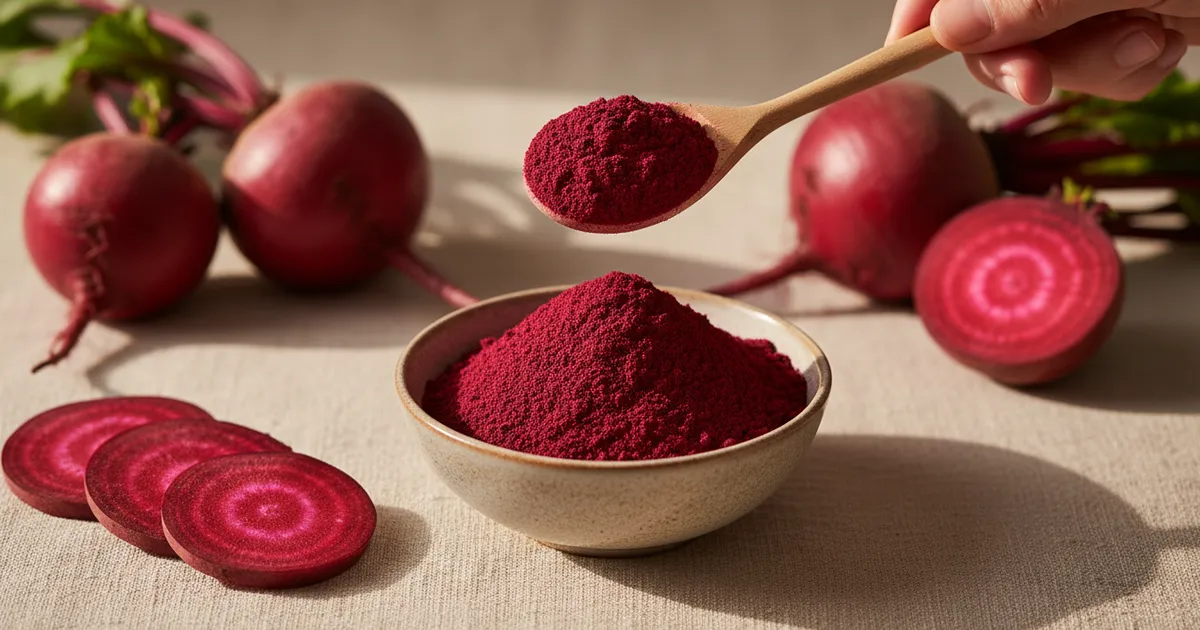
Beetroot gets its deep crimson-purple colour from betanin, a water-soluble pigment belonging to the betalain family. When beets are thermally dehydrated and milled into fine powder, the betanin concentrates — meaning a small amount of powder delivers a strong visual impact.
Unlike carmine (derived from crushed cochineal insects), beetroot powder is fully plant-based. That makes it suitable for vegan, vegetarian, halal, and kosher product lines without requiring additional certification hurdles.
Key properties of beetroot powder as a colorant:
- Colour range: Deep red to pinkish-purple, depending on concentration and pH of the food matrix
- Solubility: Water-soluble, mixes easily into batters, liquids, and dairy bases
- Label declaration: Can be listed simply as “beetroot powder” — a recognisable, clean-label ingredient
- Nutritional bonus: Contains naturally occurring nitrates, folate, and fibre, though in quantities too small to make health claims at typical usage levels
Where Manufacturers Are Already Using It
Beetroot powder is not a new ingredient. What is new is the scale of adoption driven by regulatory pressure. Here are the categories where it is gaining the most traction:
Bakery and confectionery: Red velvet cakes, macarons, cookies, and candy coatings. Beetroot powder handles oven temperatures reasonably well when mixed into batter, though some colour shift toward brown can occur at prolonged high heat.
Dairy and frozen desserts: Strawberry-flavoured yogurts, ice cream, and flavoured milk. The slightly earthy taste of beetroot is easily masked by fruit flavours and sweeteners in dairy formulations.
Pasta and noodles: Coloured pasta lines using beetroot powder are common in premium and artisanal brands. The powder holds up well during drying and maintains colour after cooking.
Beverages: Smoothie mixes, health drinks, and powdered drink blends. The water solubility of betanin makes it particularly suited for liquid applications.
Snack foods: Coatings for chips, extruded snacks, and seasoning blends where a red or pink hue is desired.
Limitations You Should Know About
Beetroot powder is not a drop-in replacement for every synthetic red dye application. Understanding its limitations prevents reformulation failures.
Heat sensitivity: Betanin degrades at temperatures above 80°C over extended periods. For baked goods, adding the powder at later stages or using shorter baking times helps preserve colour intensity. Cornell University food scientists have demonstrated that combining beet extract with hydrocolloids like locust bean gum and applying high-pressure processing can significantly improve heat stability.
pH sensitivity: Beetroot colour is most stable between pH 3.5 and 5.0. In highly alkaline environments, the colour shifts toward yellow-brown. This makes it less suitable for applications like pretzels or certain biscuits with alkaline leavening agents.
Flavour contribution: At higher concentrations, beetroot powder can introduce an earthy, slightly sweet undertone. For applications requiring colour without any flavour impact, this needs to be accounted for in formulation. Most manufacturers find that at typical colouring doses (0.5–2% of total formulation), the flavour is negligible.
Light stability: Like most natural pigments, betanin degrades under prolonged light exposure. Opaque packaging or UV-protective films extend shelf life significantly.
How It Compares to Other Natural Red Colorants
| Colorant | Source | Colour Range | Heat Stability | Dietary Suitability | Approximate Cost |
|---|---|---|---|---|---|
| Beetroot powder | Beta vulgaris (beet) | Red to purple | Moderate | Vegan, halal, kosher | Low–Medium |
| Carmine | Cochineal insect | Bright red | High | Not vegan | High |
| Paprika oleoresin | Capsicum annuum | Orange-red | High | Vegan | Medium |
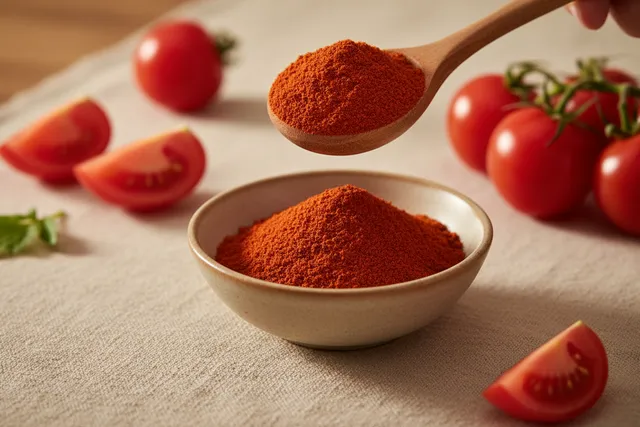
| Lycopene | Tomato | Orange-red | High | Vegan | High |
| Anthocyanins | Grape skin, elderberry | Purple-red | Low | Vegan | Medium–High |
Beetroot powder occupies a practical middle ground — affordable, clean-label friendly, and effective for most applications that don’t involve extreme heat or alkaline conditions.
Sourcing Beetroot Powder for Industrial Use
When evaluating suppliers for bulk beetroot powder, these specifications matter:
- Mesh size: Finer mesh (80–100) disperses more evenly in liquids and batters
- Betanin content: Higher betanin percentage means stronger colouring power per gram — request a certificate of analysis (COA)
- Moisture content: Below 6% for shelf stability and to prevent caking
- Microbial limits: Ensure the supplier tests for total plate count, yeast, mould, E. coli, and Salmonella
- Process method: Thermal dehydration preserves betanin better than spray drying at high inlet temperatures
Suppliers based in India — particularly those with FSSAI food safety licensing — offer competitive pricing for bulk orders due to strong domestic beet cultivation and lower processing costs.
The Regulatory Landscape in 2026
The momentum behind natural colorants is accelerating:
- The FDA banned Red Dye No. 3 in January 2025
- In February 2026, the FDA approved beetroot red as a colour additive and expanded spirulina extract approvals
- Products using natural dyes can now be labelled “no artificial colors” under updated FDA rules
- California’s ban on six synthetic dyes in school foods takes effect by end of 2027
- Major manufacturers including Nestlé, General Mills, PepsiCo, Mars, Kraft Heinz, and Hershey have pledged to remove synthetic dyes from their product lines
For manufacturers exporting to the US, EU, or Australia, switching to beetroot powder now is not just a clean-label marketing decision — it is increasingly a market access requirement.
Bottom Line
Beetroot powder will not replace every synthetic red dye in every application. But for the majority of bakery, dairy, beverage, pasta, and snack products, it delivers a stable, affordable, and label-friendly red colour that satisfies both regulators and consumers.
The manufacturers who reformulate now will have a head start. The ones who wait will eventually be forced to — and they will pay rush pricing to do it.
ThermDry produces 100% pure dehydrated beetroot powder with no additives, no fillers, and no artificial processing aids. Available in bulk for food manufacturers, food service companies, and private label brands. [Contact us for samples and pricing.]